Choosing products
dōTERRA Lemon: what to know before choosing the oil
Bright citrus starts with a familiar fruit, but the oil is a different product. Understand what the regional Lemon label permits before borrowing a recipe or routine from elsewhere.

TerraOils is an independent Nova Group-operated dōTERRA Wellness Advocate store. This guide was prepared by the TerraOils Editorial Team.
Lemon essential oil is easy to recognise as an idea: bright citrus peel in a small bottle. The buying decision becomes less obvious when search results mix food flavouring, skincare, household cleaning and diffuser recipes as though they were one use.
For a dōTERRA product bought in Europe, start with the regional directions. They tell you more about an appropriate purchase than a list of “101 uses”.
What is dōTERRA Lemon oil?
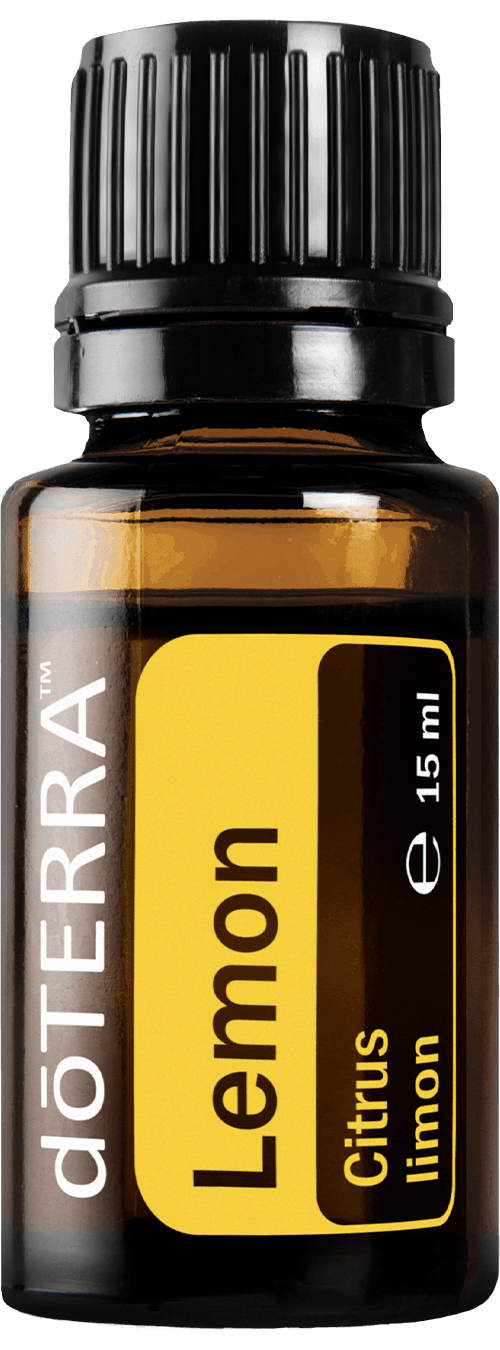
The product reviewed is Lemon, Citrus limon, in a 15 ml bottle. dōTERRA describes it as cold-pressed from the rind. That helps explain why the reference point is the aromatic peel, rather than lemon juice.
Think of those as different ingredients with different jobs. Do not replace juice with essential oil in equal quantities or expect an essential oil to provide the same acidity, volume or culinary function. A recipe that needs lemon juice may simply need lemon juice.
For a shopper, the useful question is not whether Lemon is versatile in the abstract. It is whether the exact bottle is intended for the particular use you have in mind.
The regional directions are for food flavouring
The Irish and Polish product information reviewed for this guide identifies Lemon as a food-flavouring product. It requires diluted use and sets a maximum of one drop per day. That limit is not a recommendation to consume a drop every day, and it does not describe a treatment or supplement routine.
Do not drink the oil undiluted, improvise capsule recipes or turn a culinary label into a “detox” plan. The fact that an oil has a food use does not make every method of swallowing it appropriate.
This guide deliberately does not give a drinks recipe. Adding oil to a glass of water does not make the oil dissolve, and concentrated essential oils can cause harm if misused. Follow the exact food-product instructions and seek clarification if they do not explain your intended preparation. 1 2
Why a general Lemon tip may not fit your bottle
Online advice can refer to a different region, a finished cleaning product, a cosmetic containing lemon oil or a different citrus ingredient. Those are not automatically instructions for the bottle on your product page.
A cleaning product is a complete formulation with its own directions and surface restrictions. A lemon-scented fragrance is not necessarily a lemon essential oil. And a reference to citrus in an ingredient list does not establish how much of it is present.
Keep the product and the purpose together. Our label-reading guide explains how to spot differences that can disappear in short search snippets.
Check the sunlight caution—even when you are not buying skincare
The regional Lemon cautions say to avoid sunlight and UV exposure for at least 12 hours after skin contact. Do not reinterpret that warning as an instruction to apply this food-flavouring product to the skin.
It is relevant when handling the bottle or dealing with an accidental spill. Read the complete cautions before use, rather than assuming they only matter for a use you have deliberately chosen.
For the wider distinction between different citrus products and sunlight warnings, see citrus oils and sun sensitivity.
Lemon, another citrus or a prepared blend?
Choose the product category by your intended use, then compare the aroma or flavour within that category. A sharper citrus-peel character may appeal to you; a sweeter citrus or more complex composition may appeal more. Preference is a valid reason to choose one over another.
Do not let a shared citrus name imply shared directions. Nor does a blend become an equivalent substitute because Lemon appears among its ingredients.
If you mainly want fragrance in a room, begin with products explicitly suitable for your device and that use. If you want a prepared product for the skin, choose a formulation intended for the skin. Buying Lemon first and trying to make it fit every task reverses the sensible order.
Is it a useful first oil?
It can be a useful candidate when you like its character and its labelled purpose matches your plans. It is not compulsory in a starter collection.
Before buying a trio, read how to choose your first three oils. A group of recognisable scents does not make the bottles interchangeable or suitable for a common recipe.
Is Lemon essential oil the same as lemon juice?
No. Treat them as distinct ingredients. Do not use one as a volume-for-volume substitute for the other.
Does food-flavouring use mean daily supplementation?
No. Intended culinary use and a maximum on a label are not a prescribed daily health routine.
Can I follow a skincare recipe found for a different Lemon oil?
Not without establishing that it applies to the exact formulation and regional product you own. Start with its own label, not the recipe.
Sources
- Bath safety and essential oils — Tisserand Institute.
- Essential oils: poisonous when misused — National Capital Poison Center.
Sources checked on 8 September 2026. Product information can change; confirm the current instructions for the exact product.
Products mentioned in this guide
Your next step
Explore dōTERRA Lemon
Explore dōTERRA Lemon