Choosing products
dōTERRA Peppermint: understand the product behind the mint
Peppermint appears in many products, from flavourings to roll-ons. Learn what the dōTERRA bottle actually is, how to compare formats and which assumptions to leave behind.

TerraOils is an independent Nova Group-operated dōTERRA Wellness Advocate store. This guide was prepared by the TerraOils Editorial Team.
“Peppermint” can lead you to a bottled oil, a Touch roll-on, a capsule, a toothpaste or a blend containing mint. Those products have a recognisable connection, but they are not different ways of using the same bottle.
A better purchase starts by deciding which formulation you need. The name alone cannot tell you how a product should be used.
What is the bottled dōTERRA Peppermint product?
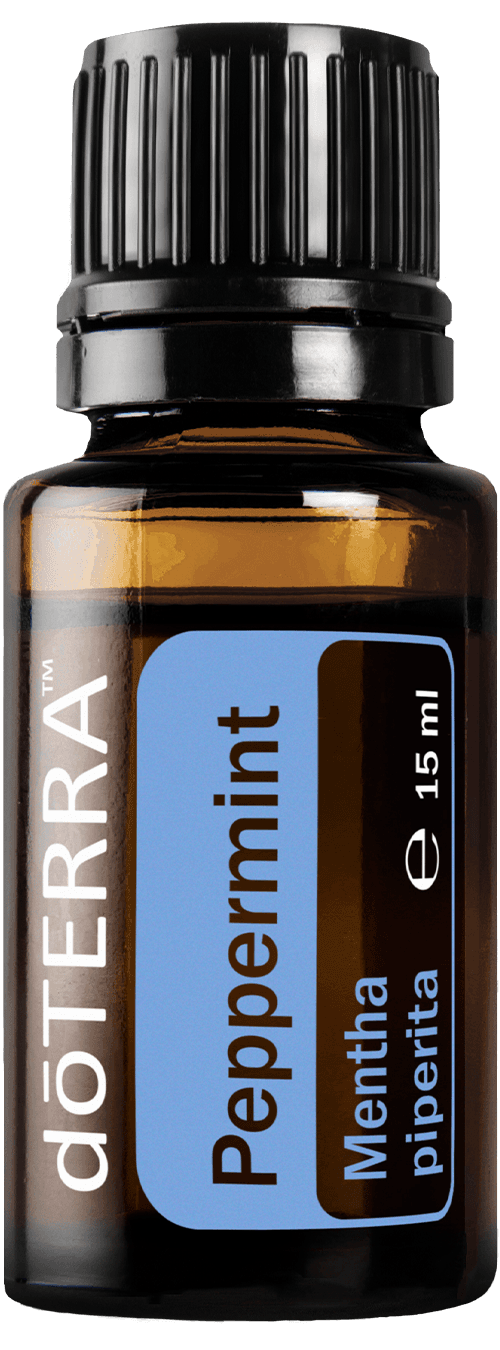
The regional bottle reviewed is Peppermint, Mentha piperita, 15 ml. Its product information identifies food flavouring as the intended use. The mint character is prominent, but the practical point is the label—not an assumption that a recognisable aroma makes it suitable for every application.
If you enjoy mint, start by asking what you want to do with it. Flavouring food, applying a prepared topical product and choosing an item for oral care are separate purchases. Selecting the correct category first will narrow the range much more effectively than searching for the “strongest peppermint”.
Read the limits without turning them into a routine
The reviewed regional Peppermint cautions require dilution and say not to exceed one drop per day. They also include precautions concerning pregnancy or medical care, children and sensitive areas. These limits do not establish that daily consumption is appropriate for you.
Do not turn the bottle into a homemade treatment for digestion, headaches or respiratory symptoms. Nor should a culinary product be treated as a substitute for a prescribed or professionally recommended medicine.
This is why the guide does not provide a daily drinks routine or a capsule recipe. A maximum stated on a label is not a goal to reach, and a shopping article cannot decide individual suitability.
Peppermint oil is not the same as a studied peppermint medicine
You may encounter research on peppermint-oil preparations when searching for symptoms. NCCIH discusses evidence involving particular preparations, including enteric-coated capsules for irritable bowel syndrome. That does not establish an equivalent dose, delivery method or effect for a retail food-flavouring bottle. 1
When the reason for shopping is a continuing symptom, address the symptom with an appropriate healthcare professional. The useful question is not which bottle has the closest name to the research, but whether the researched preparation is relevant to your situation.
Bottled oil or Touch?
Choose by the formulation's job. A topical Touch product has its own ingredients and application directions. It should not be swallowed or substituted into a food recipe because another Peppermint product has a culinary label.
Equally, do not copy a topical roll-on's directions onto the standard bottle. Where a prepared formulation includes a carrier, its total volume is not equivalent to the same volume of concentrated essential oil.
| Your shopping question | A better next step |
|---|---|
| “I want a mint-flavoured culinary ingredient” | Read the exact food-flavouring product's full label |
| “I want a convenient topical format” | Compare the prepared product's own formulation and cautions |
| “I want toothpaste” | Choose a finished oral-care product and follow its directions |
| “I want something for a symptom” | Seek appropriate health advice rather than choosing by a shared name |
For a fuller explanation, read single oils, blends and Touch roll-ons.
Extra care around children and sensitive areas
Do not apply peppermint oil to the face of an infant or young child. NCCIH highlights the possibility of serious effects from inhaling menthol in that situation. “Minty” and “refreshing” describe an experience; they do not mean suitable for a child's face, nose or chest. 1
Follow the exact product's restrictions for everyone else too. Avoid improvising steam-inhalation methods or adding a bottle to a shared room on the assumption that a stronger scent will be more useful.
In a household with animals, review essential oils and pets before bringing fragrance into common spaces.
What makes it a worthwhile purchase?
A clear purpose. You know the format, understand its instructions, enjoy the character and can see when you would use it as directed. Those are better reasons than adding it because every starter list includes mint.
Check your existing products before buying. A mint-containing blend and a separate Peppermint product may both appeal, but neither needs to be added automatically. Our first-three guide helps you avoid unnecessary overlap.
Is Peppermint Touch interchangeable with the 15 ml oil?
No. Compare the formulation and labelled use of each product. A common name does not make them interchangeable.
Does the one-drop limit mean I should use it every day?
No. A maximum is a restriction, not a recommendation or a health regimen.
Does research about peppermint capsules prove what this bottle will do?
No. Formulation, delivery method, dose and the population studied all matter. Do not translate research on a specific preparation into instructions for a different retail product.
Sources
- Peppermint oil: usefulness and safety — NCCIH / US National Institutes of Health.
Sources checked on 8 September 2026. Product information can change; confirm the current instructions for the exact product.
Products mentioned in this guide
15 ml
Peppermint
Your next step
Explore dōTERRA Peppermint
Explore dōTERRA Peppermint